Foundations Built for Soil Movement
Concrete Contractor in Denver for paving, repair, and decorative finishes on driveways, pads, and structural applications
Front Range soil types shift with seasonal moisture changes, placing stress on concrete slabs that weren't properly prepared during installation. Ridgeline Contracting delivers concrete paving, repair, finishing, and decorative work across Elizabeth, Castle Rock, Parker, and Denver metro, coordinating site grading and base prep with poured concrete finishing to account for soil stability requirements. The difference between a slab that cracks in two years and one that lasts decades often comes down to what happens before the first concrete truck arrives.
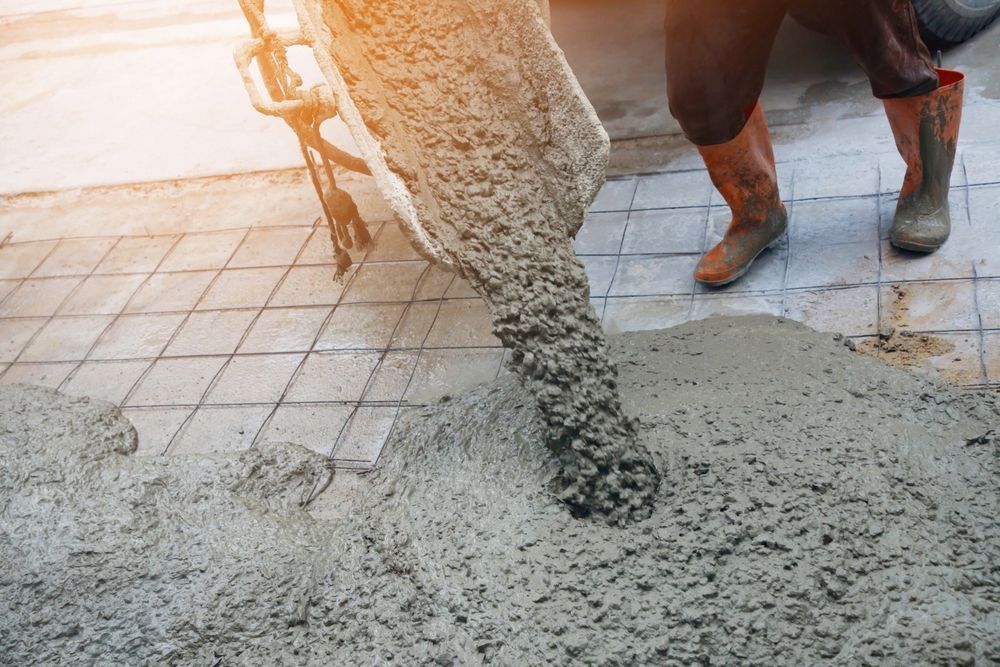
Full concrete services include site grading to establish drainage, base preparation with compacted aggregate for foundation stability, concrete mix selection suited to freeze-thaw exposure, pouring and leveling to specified thickness and slope, finishing for texture and durability, and decorative options like stamped or stained surfaces. Proper air entrainment in the mix allows microscopic expansion during freeze cycles without surface spalling.
Schedule a site evaluation to review soil conditions and drainage requirements for your specific application.
Concrete Contractor
Concrete Paving
Decorative Concrete
Concrete Finishing
Concrete Repair
Stamped Concrete
Retaining Walls
How Concrete Services Address Long-Term Performance
Concrete durability depends on three factors: mix design appropriate to climate, base preparation that prevents settlement, and finishing that establishes proper drainage. Skipping any of those steps compromises the others. A well-designed mix poured over unstable soil will crack. Perfect base prep won't save concrete with insufficient air entrainment from spalling during freeze-thaw cycles.
Once Ridgeline Contracting completes a concrete installation, you'll see a level surface with consistent slope directing water away from structures, uniform finish texture that resists scaling, and joints placed to control where cracking occurs as the slab cures and experiences thermal movement. Decorative finishes like stamped patterns or acid staining provide texture and color while maintaining the structural integrity and drainage function of the underlying slab.
Concrete repair addresses spalling, cracking, and surface deterioration on existing slabs, but repairs can't compensate for base failure or inadequate original installation. Structural applications require engineering coordination. Decorative concrete options include both new installations and overlays on sound existing surfaces.
Concrete work involves decisions about mix design, finish options, and site-specific preparation. These answers clarify what affects performance and appearance.
Questions Before Starting Your Project
What does site grading accomplish before concrete is poured?
Grading establishes slope for drainage away from buildings, removes organic material that would decompose and create voids beneath the slab, and provides a level working surface for placing and compacting the aggregate base that prevents settlement.
How does air entrainment protect concrete in Denver's climate?
Microscopic air bubbles in the mix provide space for water to expand when it freezes, preventing the internal pressure that causes surface spalling and cracking—critical for any exterior concrete exposed to freeze-thaw cycles.
When should control joints be cut in new concrete?
Joints get cut or formed within twenty-four hours of finishing, typically spaced at intervals equal to slab thickness times two to three—they create intentional weak points where cracking occurs in controlled locations instead of randomly across the surface.
Why does base preparation matter more than concrete thickness in Castle Rock or Parker?
Expansive clay soils in those areas shift with moisture changes; a four-inch slab over properly compacted aggregate base outperforms a six-inch slab poured directly on unstable soil because the base isolates the concrete from ground movement.
What's included in decorative concrete finishing?
Stamped concrete involves pressing textured mats into fresh concrete to mimic stone or brick patterns, while stained concrete uses acid or water-based dyes to add color—both require sealing after curing to protect the finish and make cleaning easier.
Ridgeline Contracting coordinates site preparation, concrete installation, and finishing work to match soil conditions and intended use. Arrange a consultation to discuss mix specifications, decorative options, and site-specific preparation requirements.