Large Parcel Preparation for Development and Management
Acreage clearing in Douglas County for multi-acre residential and commercial properties requiring staged vegetation removal and site restoration
When a property spans five acres or more in the Denver foothills, the process of preparing that land for development involves more than surface-level brush removal. Ridgeline Contracting clears large parcels throughout Douglas County and the surrounding Denver metro area, addressing not just vegetation but the soil type variations and terrain challenges that define Front Range properties. Projects in the foothills and along the I-25 corridor often require staged clearing because equipment access, debris volume, and site topography dictate a phased approach rather than a single-day operation.
The work begins with heavy equipment mobilization to the site, followed by selective removal of brush and trees based on the property's intended use. Debris is segregated as it's removed—organic material separated from root masses and large timber—so that disposal and recycling follow local waste management requirements. Final grading restores the land to a stable, usable surface, addressing drainage patterns altered by clearing.
Schedule a site evaluation to assess equipment access and determine the staging plan for your property.
What Multi-Acre Land Clearing Accomplishes
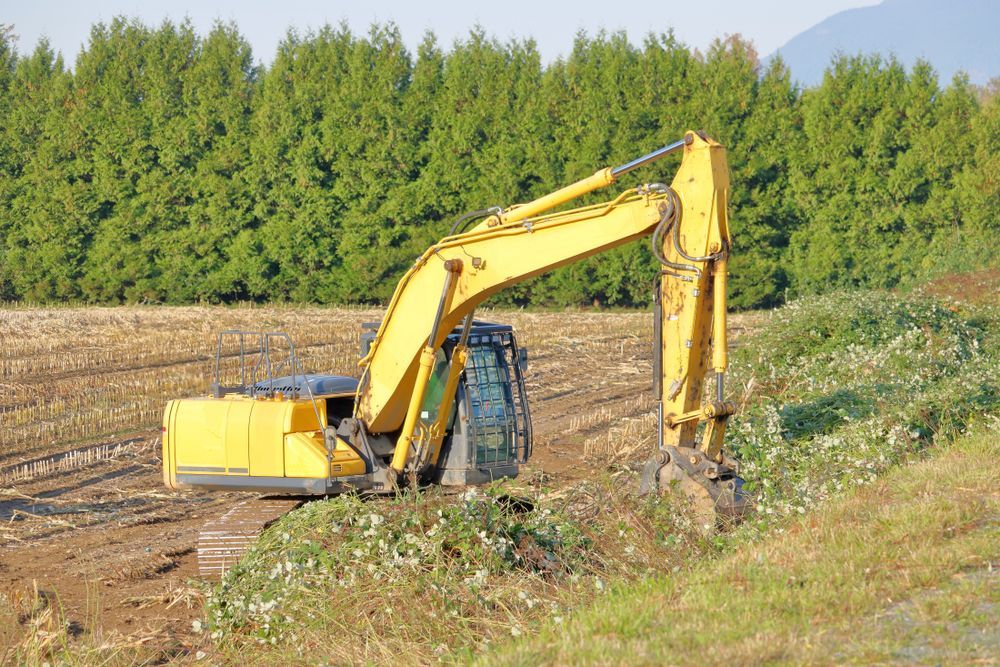
Clearing acreage means removing not only visible vegetation but root systems that interfere with grading and future construction. Equipment capacity determines how quickly large parcels can be processed, and Ridgeline Contracting's machinery supports projects ranging from five-acre residential lots to large commercial tracts. Soil type in Douglas County varies from clay-heavy deposits to rocky decomposed granite, and each material responds differently to grading after vegetation is removed.
Once clearing is complete, the property's topography becomes fully visible, making it easier to plan grading, drainage, and construction access. Root obstructions are gone, debris is hauled off-site, and the land is graded to prevent erosion before the next phase begins. You notice the transition immediately—what was once dense scrub or timber becomes open, level ground ready for surveying or building.
The service includes debris removal and site restoration but does not extend to utility installation or foundation excavation. If the project involves wetlands or protected vegetation zones, additional permitting may be required before clearing begins.
Property owners in Douglas County often need to understand how terrain and soil conditions affect both timeline and approach.
Questions Before Starting Your Land Clearing Project
How long does it take to clear multiple acres in the Denver foothills?
The timeline depends on vegetation density, terrain slope, and equipment access, but most five- to ten-acre projects are completed in stages over several days to allow for debris removal between phases.
What happens to the debris after acreage clearing?
Organic material is separated from larger timber and root masses, then either hauled to recycling facilities or disposed of according to local environmental regulations in the Front Range area.
Why is staged clearing necessary for foothills properties?
Terrain access and soil stability often require phased work so equipment can operate safely without compacting unstable ground or damaging areas not yet cleared.
What's included in site restoration after clearing?
Final grading levels the cleared land and addresses drainage patterns, preventing erosion and preparing the site for surveying or construction layout.
How does soil type in Douglas County affect the clearing process?
Clay-heavy soils compact differently than decomposed granite, which means grading equipment and techniques are adjusted to prevent drainage problems or surface instability after vegetation is removed.
Ridgeline Contracting adapts equipment and sequencing to match the specific conditions of your property. Request a detailed assessment to determine mobilization requirements and project phases at (303) 419-5468.